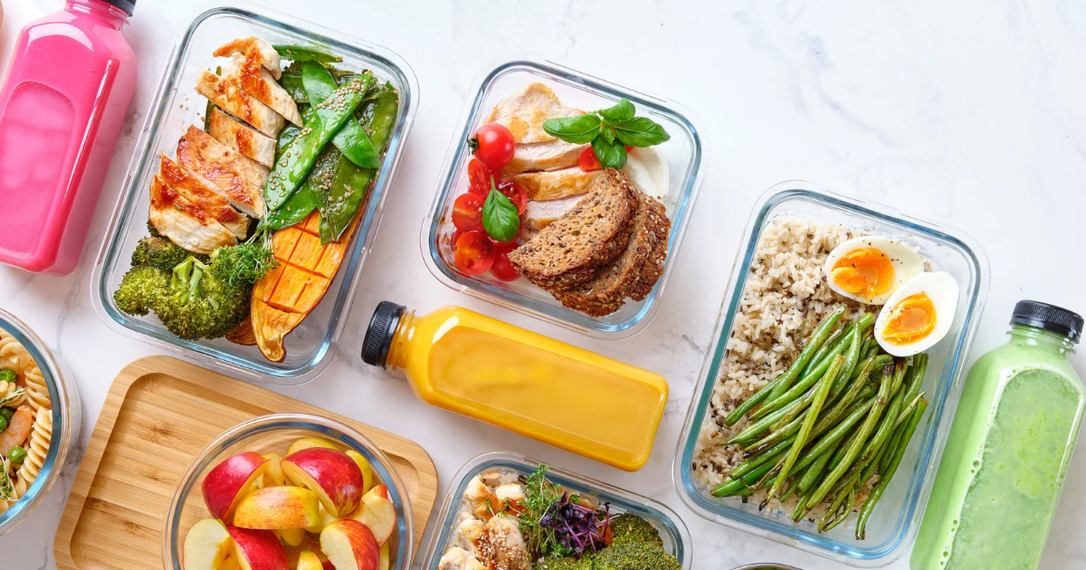
Weekly schedules can fill up fast. Between work, school, activities, and everything else, being consistent with easy meal prep for weight loss is often one of the first things to fall off the list. But it doesn’t have to feel so daunting, and it actually can become pretty mindless with a few simple shifts. And when meal prep feels easier, you’re more likely to do it consistently to ensure your food choices and calorie intake align with your weight loss goals.
So many of my clients have the perception that meal prepping means spending your entire Sunday in the kitchen. With a little planning and a few strategic shortcuts, you can make healthy eating easier, less stressful, and more realistic for your lifestyle. Meal planning can also be especially helpful if you’re taking a GLP-1 like Wegovy or Zepbound and your appetite is suppressed.
The benefits of meal planning for weight management are not just hearsay – they’re supported by science. Meal planning more frequently was associated with greater weight loss outcomes during a 40-week behavioral weight loss program.
This article dives into the “how-to” on healthy meal prep for busy schedules, offering three flexible approaches.
3 Ways to Meal Prep Based on Your Schedule
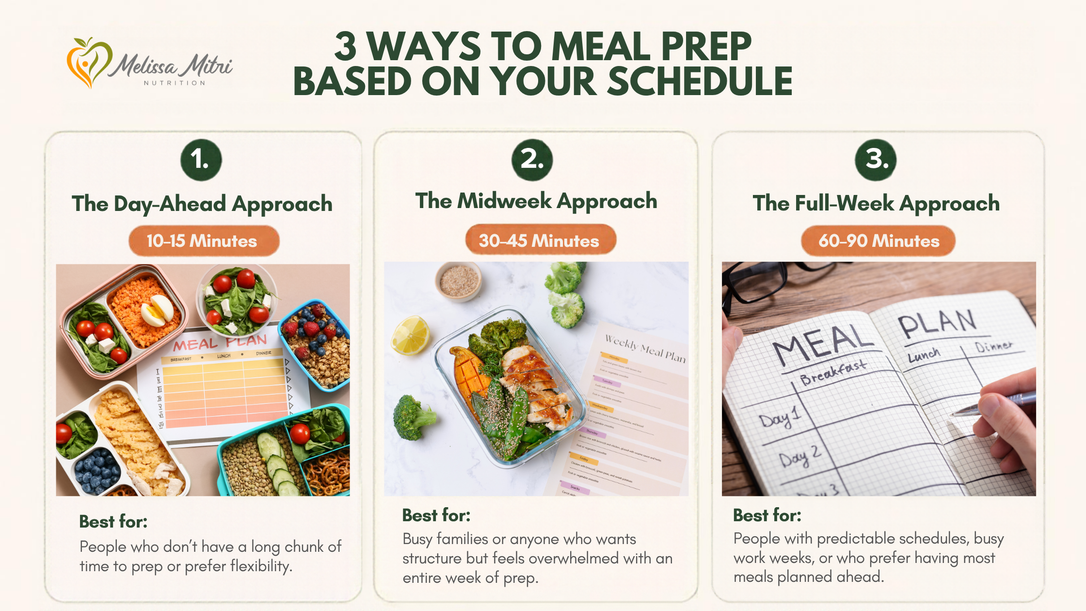
You don’t have to prepare an entire week of meals to see the benefits from meal planning. Here are three approaches I recommend for easy meal prep for weight loss, depending on your schedule and time constraints. One is not better than the other, and so I encourage you to find one that works best for you.
1. The Day-Ahead Approach: 10–15 Minutes
Best for: People who don’t have a long chunk of time to prep or prefer flexibility.
Spend a few minutes each evening thinking about the following day’s meals. Check what ingredients you already have, decide what you’ll make, and take care of one or two small tasks. You can do this when you’re already in the kitchen cleaning up that day’s meal, so you’re already in “meal prep” mode.
This often makes it easier to just dive right in versus having to intentionally go into the kitchen to plan when you’re doing something else. This approach can align with meal prep for beginners, where it feels much easier to dive in when you’re new to it.
For example, you might pack tomorrow’s lunch while cleaning up dinner, chop vegetables for the next evening, or pull frozen proteins into the refrigerator to thaw in time for the next day. This day-ahead prep doesn’t have to be just for meals either, you can also portion out balanced snacks so they’re ready to go. This can reduce the likelihood of overdoing it on snacks, which is easy to do when you’re picking during dinner prep.
Even 10 minutes of preparation can make the next day run more smoothly!
2. The Midweek Approach: 30–45 Minutes
Best for: Busy families or anyone who wants structure but feels overwhelmed with an entire week of prep.
Choose one or two days, such as Sunday and Wednesday, to prep ingredients for the next few days. Many of my clients choose this approach and find it can be a great middle ground.
Focus on versatile staples like cooked proteins, whole grains, washed vegetables, and easy snacks. You can combine these ingredients in different ways throughout the week without having to start from scratch every night.
This approach also helps keep meals fresh and gives you the flexibility to adjust your plans as the week unfolds.
3. The Full-Week Approach: 60–90 Minutes
Best for: People with predictable schedules, busy work weeks, or who prefer having most meals planned ahead.
If you’re looking for a way to make healthy meal prep for busy schedules more manageable, setting aside time once a week to plan meals, grocery shop, and prepare ingredients or complete dishes can be a great option. This is what most people picture when they think of meal planning, and it may work for some people who don’t want to do much prep during the week.
Consider batch-cooking proteins, grains, soups, or casseroles that can be portioned into individual servings. Refrigerate what you’ll eat over the next few days and freeze the rest for later in the week.
You can also prep ingredients instead of complete meals, giving yourself more variety without additional cooking time.
Remember: You don’t need to prep every breakfast, lunch, and dinner. Even preparing just your lunches or a few weeknight dinners for the week can make a big difference.
5 Shortcuts to Make Meal Prep Even Easier
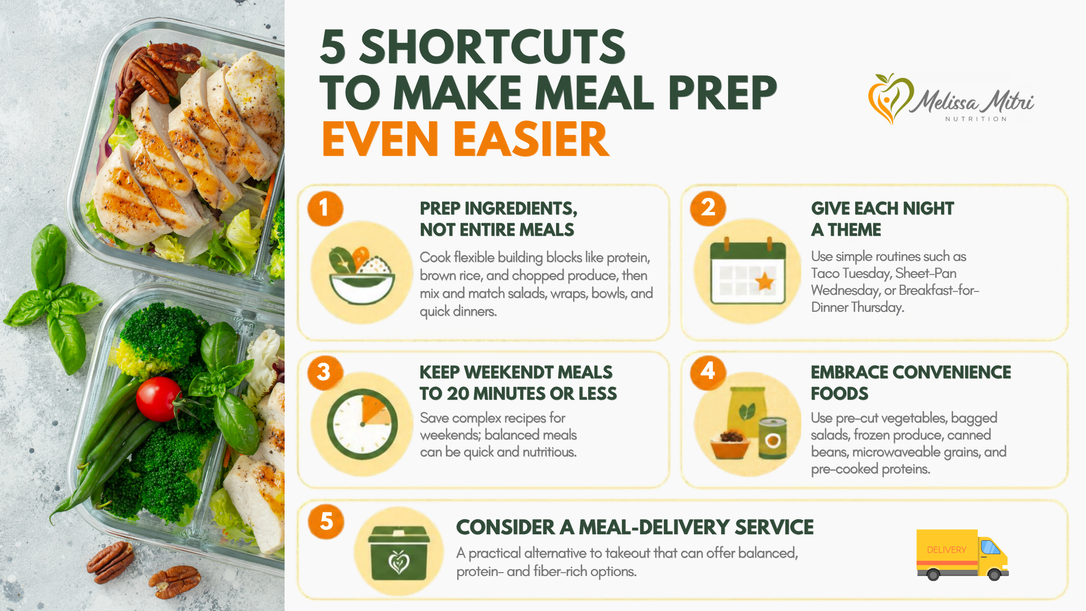
Now that we covered the three easy meal prep for weight loss approaches, let’s review a few ways to make the entire process easier. These five tips not only save you time and effort, but can be applied to any meal planning approach you choose.
1. Prep Ingredients, Not Entire Meals
Instead of preparing five identical lunches, focus on having a few building blocks ready. For example, you can cook a protein like fish, prepare a grain like brown rice, and wash or chop some produce like Brussels sprouts.
Then mix and match throughout the week to create salads, wraps, bowls, or quick dinners using those ingredients in different ways. This can help add a variety of meals to your week without having to plan out the exact meal you’ll have day to day.
2. Give Each Night a Theme
One of the easiest ways to simplify meal planning is to create a loose weekly routine. Think Taco Tuesday, Sheet-Pan Wednesday, or Breakfast-for-Dinner Thursday (a new favorite in our house!). You can rotate proteins, vegetables, starches, and seasonings to keep meals interesting without having to come up with something completely new every night.
3. Keep Weeknight Meals to 20 Minutes or Less
Save more complicated recipes for weekends when you have more time. Some of my favorite quick meal prep ideas include rotisserie chicken with microwaveable brown rice and frozen vegetables, simple stir-fries with tofu or shrimp, eggs with whole-grain toast and berries, or grain bowls using leftover ingredients.
Repeat after me: A balanced meal doesn’t have to be complicated to be nutritious.
4. Embrace Convenience Foods
Pre-cut vegetables, bagged salads, frozen produce, canned beans, microwaveable grains, and pre-cooked proteins can dramatically reduce prep time (enter the 20-minute meal we just mentioned).
And remember, convenience doesn’t automatically mean unhealthy. These foods can actually make it easier to include more fiber, protein, vitamins, and minerals in your meals that many people are not getting enough of.
5. Consider a Meal-Delivery Service
If takeout is your go-to on hectic nights, a meal-delivery service can be a helpful alternative.
Depending on the service, the cost may be comparable to takeout, while offering balanced options that better align with your nutrition goals.
A couple of options I like are Factor Meals and Hungryroot, which both offer calorie-conscious meals rich in protein and fiber, the two most filling and influential nutrients for weight loss. Many meal delivery services provide meal kits with pre-portioned ingredients you cook yourself, or heat-and-eat options for extra busy nights.
From personal experience, using a meal delivery service takes much of the guesswork out of cooking compared to finding a recipe on your own. With meal delivery you don’t have to pre-portion ingredients or search for meals, it does the work for you and preserves needed brain power (which honestly as a mom and business owner, is priceless).
Why Meal Prep Matters for Weight Loss
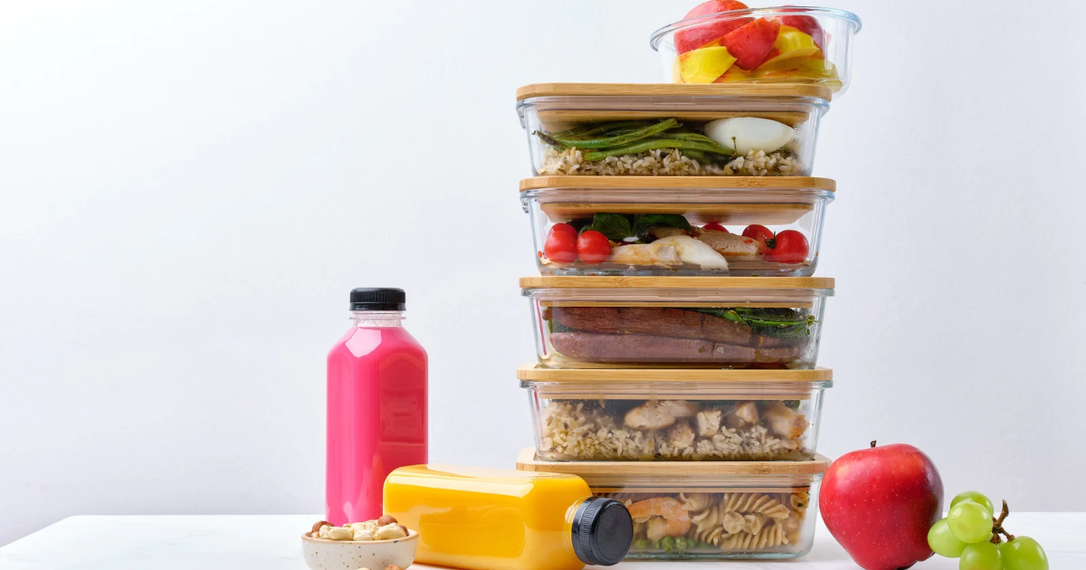
Meal prep isn’t just about saving time and energy (although that is a huge perk). It also helps you make more intentional food choices when life gets busy.
When you have healthy ingredients or meals ready to go, you’re less likely to skip meals, grab something out of convenience, or find yourself overly hungry at the end of the day. And this is not just speculation – I see this time and time again with my clients. When they are more consistent with planning, they feel better and they are more likely to see results.
Meal planning can also help you:
- Build more balanced meals with enough protein, fiber, and other important nutrients.
- Manage portions ahead of time without having to measure or track everything.
- Reduce decision fatigue by knowing what you’re having ahead of time before your brain gets too tired.
- Save money and reduce food waste by using what you already have.
And like we mentioned, there’s no one-size-fits-all approach to meal prep. The key is finding a routine that works for your schedule – whether it’s the day-ahead, midweek, or full-week approach.
How to Build a Balanced Meal That Supports Weight Loss
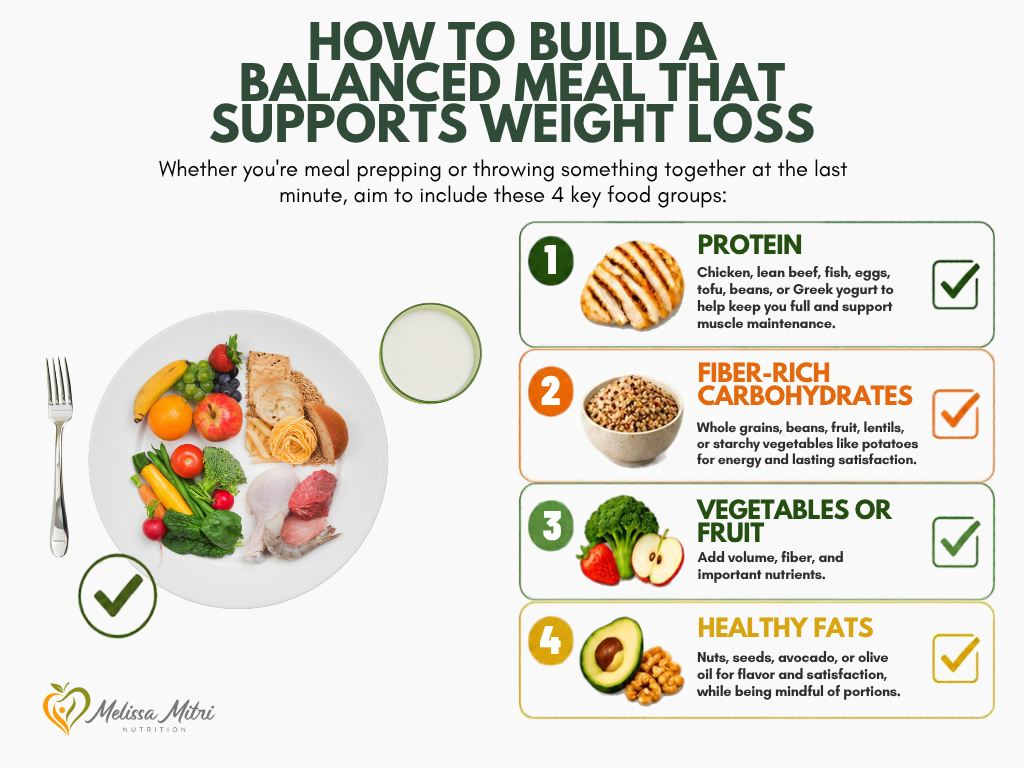
Whether you’re meal prepping or throwing something together at the last minute, aim to include these 4 key food groups:
- Protein: Chicken, lean beef, fish, eggs, tofu, beans, or Greek yogurt to help keep you full and support muscle maintenance.
- Fiber-rich carbohydrates: Whole grains, beans, fruit, lentils, or starchy vegetables like potatoes for energy and lasting satisfaction.
- Vegetables or fruit: Add volume, fiber, and important nutrients.
- Healthy fats: Nuts, seeds, avocado, or olive oil for flavor and satisfaction, while being mindful of portions.
You don’t need to eliminate carbohydrates or eat tiny portions to lose weight. In fact, meals that are too small or lack protein and fiber may leave you hungry and more likely to snack later.
The goal is to build meals that are satisfying, balanced, and appropriate for your individual calorie needs.
The Bottom Line: Keep Meal Prep Simple and Sustainable
Easy meal prep for weight loss doesn’t have to require hours in the kitchen or perfectly planned meals every day. Even a little preparation can make a big difference in your ability to stay consistent with your weight-loss goals.
Start with one small change, whether that’s planning tomorrow’s lunch, prepping ingredients twice a week, or keeping a few healthy convenience foods on hand. Remember, the best meal prep routine isn’t the most elaborate one. It’s the one you can realistically stick with, even during your busiest weeks.
Feeling like you don’t have the bandwidth to work on your weight health journey right now? Reach out to me to learn how I can help you create simple, sustainable nutrition strategies that fit your lifestyle and weight-loss goals.