
If you’re considering a GLP-1 medication like Wegovy or Zepbound for weight loss, you may have one big question: What happens if I start taking it and eventually want—or need—to stop? This is exactly what we’re going to cover today to help you plan for success.
While GLP-1 medications for obesity are intended for long-term treatment (because obesity is a chronic, relapsing disease), the duration of your treatment is a personal choice that should be made with your healthcare provider. Your health history, goals, medication tolerance, finances, and preferences all matter, and fortunately, more treatment options for obesity are continuously expanding.
And while some people stay on GLP-1s for years, the reality is that more than half discontinue them. In fact, a 2025 study published in JAMA Network Open involving more than 125,000 adults found that 53.6% discontinued treatment within one year. Among those without type 2 diabetes, that number was even higher, at 64.8%. This makes sense as these medications also help treat diabetes, and so people diagnosed with diabetes may be more likely to stay on them for that purpose.
These findings highlight why having a long-term plan matters, whether you’re just starting a GLP-1, currently taking one, or considering stopping.
7 Dietitian-Approved Tips to Maintain Weight Loss After GLP-1s
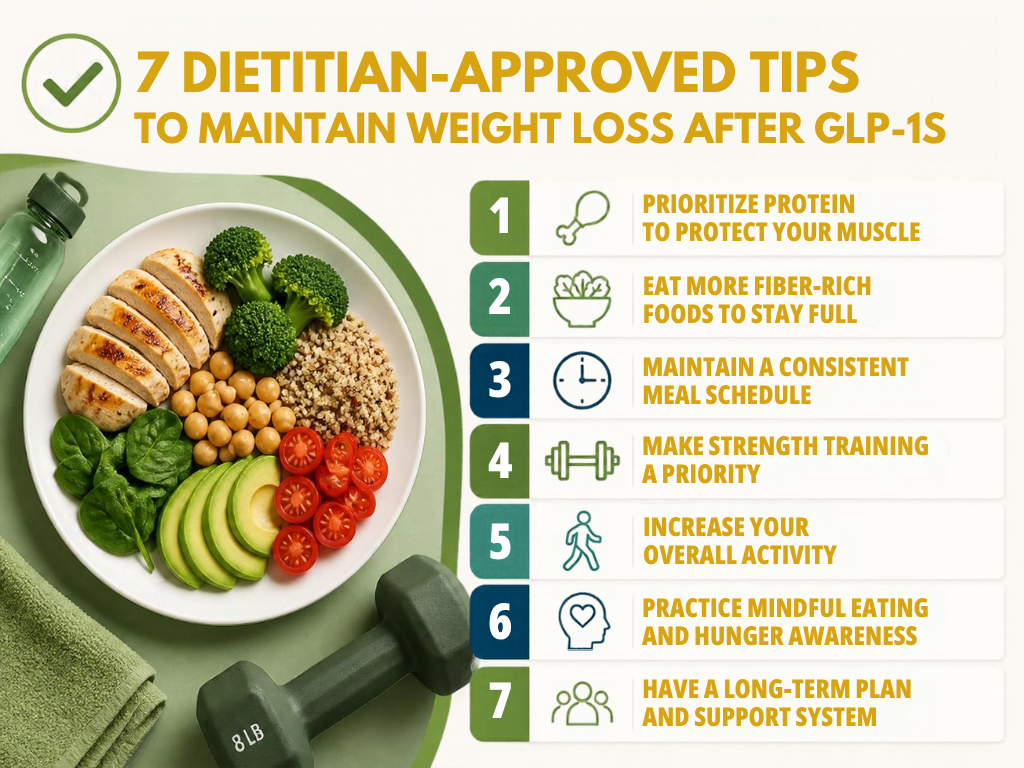
Whether you’re currently taking a GLP-1 or planning to stop, these strategies can help you build habits that support long-term weight management and metabolic health.
1. Prioritize Protein to Protect Your Muscle
Aim to include a source of protein at every meal, such as eggs, Greek yogurt, chicken, fish, lean beef, tofu, or beans.
For many adults losing weight on GLP-1s, a protein target of approximately 1.2–1.6 grams per kilogram of ideal body weight daily may be appropriate. However, individual protein needs vary based on your health status, goals, and activity level. Spreading protein throughout the day or sneaking in an extra protein source at every can make your daily protein goals easier to achieve. For example, including a quality protein at every meal plus adding a tablespoon of chia seeds, flax seeds, or nuts for an extra boost.
Protein is essential because during weight loss, your body loses some muscle along with fat. The media likes to overhype the amount of muscle lost with GLP-1s, but the reality is the amount of muscle lost is pretty equivalent to any weight loss journey that involves meaningful weight loss. Even so, preserving as much muscle and the quality of your muscle is important for maintaining strength, mobility, and metabolic health.
Bottom line – the more muscle you have, the more calories your body burns during exercise and day-to-day activities, helping you to stay in a calorie deficit more easily with less diet restriction.
2. Eat More Fiber-Rich Foods to Stay Full
Fiber-rich foods take longer to digest, add volume to meals, and can help you feel satisfied longer. As your appetite increases after stopping a GLP-1, these traits become especially important. Aim for approximately 25–35 grams of fiber daily, increasing gradually if your current intake is low to allow your digestive system to adjust.
Some easy options include vegetables, berries, oats, beans, lentils, and whole grains. I also encourage clients to fill a generous portion of their plates with non-starchy vegetables to help create satisfying meals that pack volume without excessive calories. Transitioning to volume-based eating can be especially helpful when coming off a GLP-1 to provide more bulk and manage increased hunger.
3. Maintain a Consistent Meal Schedule
Try to maintain a regular eating schedule with balanced meals that include protein, fiber-rich carbohydrates, and healthy fats. This can help you get ahead of your hunger and can reduce the chances of overeating. If you were using reminders to eat while taking a GLP-1 (something I highly encourage!), consider maintaining some of that structure as your appetite changes.
I help my clients build a meal schedule as soon as they start on a GLP-1, as it’s so easy to skip meals or go a long time without eating when your appetite is suppressed. But skipping meals or eating very little earlier in the day can leave you overly hungry later once you stop your GLP-1, making portion control more difficult. Create a simple daily schedule for yourself, and make it easily accessible so you stay on track.
4. Make Strength Training a Priority
Protein is the supporter, but strength training is the primary catalyst for preserving muscle, physical function, and maintaining your progress off GLP-1s. Aim for at least two to three strength-training sessions per week for 20-30 minutes, working all major muscle groups.
And while strength training is important for weight loss, it’s especially valuable for maintaining your progress. Find a strength training activity you enjoy that you can maintain consistently, whether that’s a workout video with dumbbells, a barre class using resistance bands, or bodyweight exercises in your office as a starting point.
Build the consistent habit first, then increase the frequency, intensity, and duration.
5. Increase Your Overall Activity
It’s not just strength training that matters when coming off GLP-1s—regular cardio and daily movement are just as important. While the general recommendation is at least 150 minutes of moderate-intensity exercise per week, research suggests that people maintaining significant weight loss may benefit from 200–300 minutes per week. This can include brisk walking, biking, swimming, jogging, or other cardiovascular activities you enjoy and can be broken up any way, shape, or form that you can get into during your busy days.
While this is the eventual goal, start where you are and gradually build up. Even adding a 10–15-minute walk after meals or increasing your daily steps can make a difference. The goal is to find a combination of structured exercise and everyday movement that you can maintain long-term.
And don’t forget about movement outside of your workouts! Everyday activities like walking the dog, gardening, cleaning, and taking the stairs also contribute to your daily calorie-burning potential and help you break through a weight loss plateau.
6. Practice Mindful Eating and Hunger Awareness
GLP-1 medications naturally reduce hunger, so coming off them requires reconnecting with your body’s hunger and fullness signals. Before eating, get into the habit of asking yourself whether you’re experiencing physical hunger, cravings, stress, or simply thinking about food. This is easier to remember if you aim to eat slowly, minimize distractions, and track what you’re eating so you’re more self-aware.
You can also use a hunger-and-fullness scale to recognize when you’re comfortably satisfied rather than overly full. The goal isn’t to ignore hunger or to have no hunger at all (hunger is a sign of health!). It’s to understand your body’s signals and respond in a balanced way.
7. Have a Long-Term Plan and Support System
One of the biggest mistakes I see is too much focus on the weight loss phase, but not enough on what comes after that. Instead, it’s important to start building your long-term habits while you’re still taking your GLP-1.
This can involve working with your healthcare team to discuss what happens if you experience a plateau, your insurance changes, or you decide to discontinue treatment. It’s important to remember that GLP-1 benefits go beyond weight loss. Research shows that stopping these medications may also reverse improvements in blood sugar, blood pressure, and cholesterol levels.
A registered dietitian can help you adjust your nutrition plan as hunger returns, troubleshoot challenges, and provide accountability to support your health. It’s also critical to address sleep, stress, and hormonal changes, particularly during perimenopause and menopause, which can influence appetite, energy, and weight management.
If you’re considering tapering your medication, talk with your prescriber. There is currently no well-established, evidence-based tapering protocol proven to prevent long-term weight regain, but a well-informed provider can help guide you based on the best available evidence.
Ideally, seek guidance from an obesity medicine provider, as these physicians have more advanced knowledge and experience in GLP-1 care.
Why Do People Stop Taking GLP-1 Medications?
There are several reasons someone may discontinue a GLP-1. These are the typically the most common I see in my practice and in the research:
- Cost and insurance coverage: These medications can be expensive, and insurance coverage may change or end without much warning.
- Side effects: Persistent nausea, vomiting, constipation, or other digestive symptoms may make treatment difficult. (Side note—these can often be better managed or even prevented with a solid nutrition plan)
- Reaching a weight-loss goal: Some people assume they no longer need medication once they’ve reached their desired weight. Or, this may be their plan from the start – to take the medication until they’ve reached their goal, and then try to maintain it on their own with diet and lifestyle.
- Personal preferences: Not everyone wants to take medication indefinitely. I also have some clients who may be concerned about the long-term effects of taking GLP-1s for years. In these cases, my role isn’t to convince them to stay on a GLP-1, but to share the best available evidence from over 20 years of use in diabetes management.
- Access issues: Medication shortages or changes in availability can interrupt treatment.
Overall, many of the women I work with in my practice are excited about the potential benefits of GLP-1 medications but worry about regaining weight, becoming dependent on another medication, or having to take it forever.
It’s important to understand that GLP-1 therapy is a journey, where stopping doesn’t necessarily mean someone will never pursue obesity treatment again. Some people may restart treatment, transition to another medication, or consider bariatric surgery under their provider’s guidance.
Will You Gain Weight Back After Stopping a GLP-1?
Weight regain is common after discontinuing GLP-1 medications, but the amount varies from person to person. In the 2022 STEP 1 trial extension, participants who stopped semaglutide regained approximately two-thirds of the weight they had previously lost over the following year, on average.
This happens because GLP-1 medications help reduce hunger, increase fullness, and quiet what’s commonly called food noise—those persistent thoughts about food and eating. When medication is discontinued, appetite and food noise return shortly after. At the same time, your body naturally adapts to weight loss by needing fewer calories and increasing biological signals that encourage you to eat.
This metabolic adaptation is often suppressed when actively taking a GLP-1, which is one reason why they can be so effective for weight maintenance (although it is possible their appetite-suppressing effects may gradually wear off with time in some people).
But the research on stopping GLP-1s isn’t all discouraging. While weight regain is common after stopping GLP-1s, it doesn’t happen to everyone, and the amount varies. Studies show that many people regain some of the weight they lost, some still maintain a meaningful amount of weight loss. In other words, they may still weigh less than they did before starting the medication, which is a win for many people who previously regained all of their weight back and then some during past attempts.
Most importantly, regaining weight doesn’t mean you’ve failed. Understanding what to expect and building healthy habits early can help you feel more prepared and confident, whether you continue your medication or eventually stop taking it.
The Bottom Line: Plan for Long-Term Success, Not Just Weight Loss
GLP-1 medications can be valuable tools for weight management when you’re actively taking them. But they’re only one part of the bigger picture. Whether you continue medication long-term, transition to another treatment, or eventually discontinue it, the habits you build along the way still matter.
As a registered dietitian, I encourage my clients to focus on protecting muscle, eating balanced meals, staying active, managing hunger, and building realistic routines they can maintain for life. And remember, if your weight changes after stopping a GLP-1 (or even when you’re still on one), it doesn’t erase your progress. It may simply mean your treatment plan needs to evolve.
Looking for personalized nutrition support during or after GLP-1 therapy? Reach out to me to learn how I can help you create a sustainable plan that fits your lifestyle, health needs, and long-term goals.